Topic 3
Okazaki Fragments
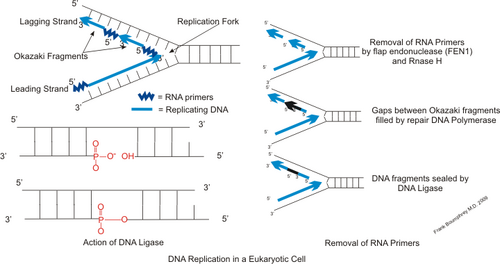
Synthesizing the Lagging Strand
Why This Matters
Remember one fundamental rule: DNA polymerase can only synthesize DNA in the 5’ → 3’ direction.
This creates a problem.
- The leading strand can be copied continuously.
- The lagging strand cannot.
Instead, the lagging strand is copied as many small DNA pieces called Okazaki fragments.
However, the final chromosome cannot contain thousands of disconnected DNA pieces or RNA primers. Cells therefore perform a cleanup process after each fragment is synthesized.
Without this processing:
- RNA would remain inside DNA.
- DNA would contain breaks (nicks).
- The chromosome would not be chemically continuous.
- DNA would become unstable.
- Replication would be incomplete.
- Future rounds of replication and transcription would fail.
For bioinformatics, understanding this explains why the finished genome is one continuous DNA molecule, even though it was synthesized in pieces.
The Big Picture
Imagine repairing a long road. Instead of paving the whole road continuously, workers lay down many short road segments.
Afterward they must:
- Remove temporary supports
- Fill the gaps
- Seal every joint
Only then does the road become continuous. Okazaki fragment processing is exactly the same idea.
Where Does This Fit?
↓
Replication Fork Opens
↓
Leading Strand & Lagging Strand
↓
Okazaki Fragment Processing
↓
Continuous DNA Strand
↓
Cell Division
Step 1 — Primer Deposition
Placing the starting block
The Problem
DNA polymerase cannot start DNA synthesis from nothing. It requires an existing free 3’-OH group.
DNA Polymerase ❌ Cannot begin
Why RNA?
You might wonder: Why use RNA at all if it just has to be removed later?
The reason comes down to the chemical rules of the enzymes. DNA Polymerase is an extender, but it cannot start from scratch. It absolutely requires an existing piece of nucleic acid (specifically, a free 3'-OH end) to attach the very first DNA nucleotide onto.
RNA Polymerases (like Primase), however, have a special ability: they can grab two free RNA nucleotides and join them together on the template strand out of thin air, without needing any pre-existing foundation.
Therefore, Primase acts as the initiator. It builds a temporary RNA foundation (the primer) from scratch, providing the critical 3'-OH starting block that DNA Polymerase must have to begin its work.
The Solution
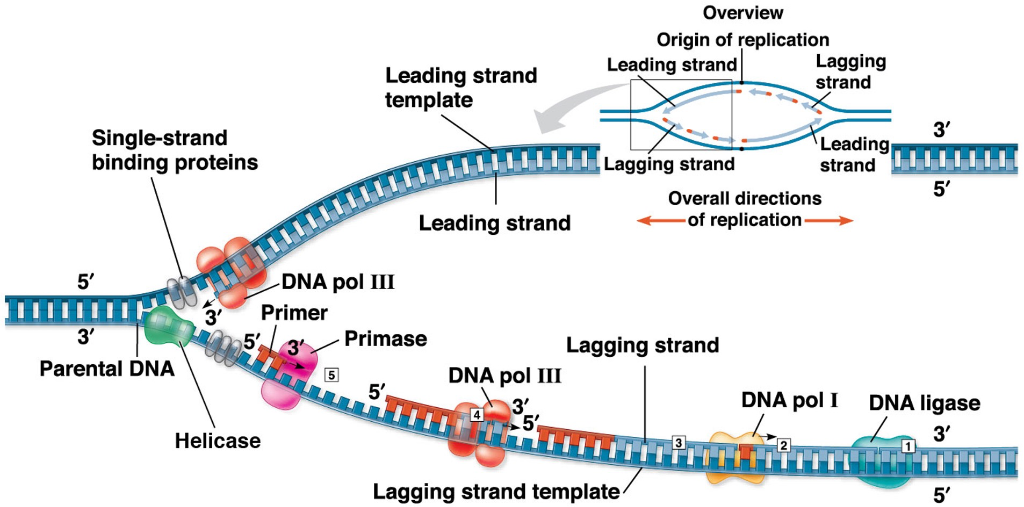
Another enzyme arrives first: RNA Primase.
Primase synthesizes a short RNA primer (about 10 nucleotides in prokaryotes, 10–12 in eukaryotes). This primer provides the required 3'-OH for DNA polymerase.
=======================
RNA Primer
[U-C-G-A-G-C-U]
DNA synthesis can now begin.
Step 2 — Elongation
Building the fragment
Copying the DNA
Now the main copying enzyme arrives (DNA Polymerase III in bacteria, DNA Polymerase δ in eukaryotes).
This enzyme adds DNA nucleotides. The polymerase keeps extending the fragment until it reaches the previous Okazaki fragment. Eventually it stops because another fragment already occupies that space.
[U-C-G-A]
↓
DNA
[T-C-G-A-A-C-G-T]
The Result
RNA-----DNA
RNA-----DNA
Each fragment still begins with RNA. This is a problem.
Why Can't RNA Stay?
DNA is supposed to be Deoxyribonucleic Acid, not an RNA-DNA Hybrid. RNA differs chemically (ribose sugar, extra oxygen atom, uracil). RNA is less stable. Cells therefore remove every RNA primer after replication.
Step 3 — Primer Removal
Nick Translation
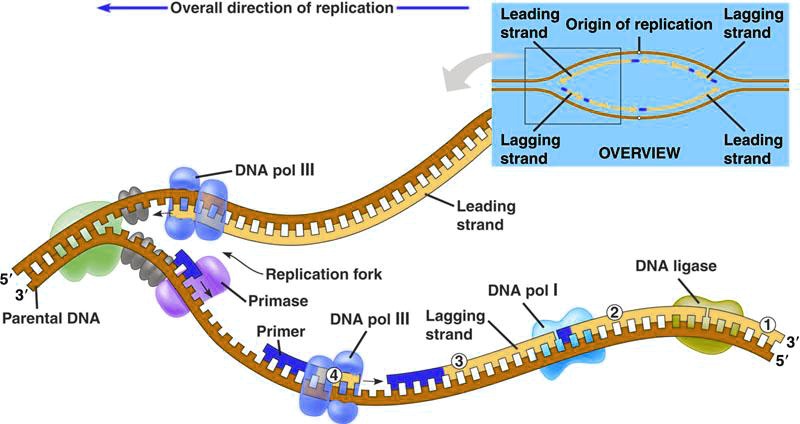
Now a different enzyme takes over: DNA Polymerase I.
Unlike Polymerase III, Polymerase I has an additional ability: 5' → 3' Exonuclease Activity. This means it can remove nucleotides ahead of itself.
Like a Construction Worker
Imagine a worker simultaneously tearing up the old floor and laying new tiles immediately behind them.
[U-C-G-A-U-C]
↓
Remove old tiles
↓
Lay new tiles (DNA) immediately
DNA Polymerase I does exactly this.
Nick Translation
It simultaneously removes RNA nucleotides (such as Uracil) while replacing them with DNA nucleotides (such as Thymine).
As it moves, RNA disappears, and DNA appears. No gap is left. This process is called Nick Translation because the small break (nick) effectively moves forward as the enzyme replaces RNA with DNA.
↓
Back: Add DNA (Polymerase)
Very efficient.
Step 4 — Nick Sealing
The final weld
Now every nucleotide is DNA. But there is still one tiny problem: The sugar-phosphate backbone is not completely connected.
The Missing Link
Imagine a chain:
There is one missing link. This tiny break is called a Nick. There are no missing bases. Only one missing chemical bond.
DNA Ligase
DNA Ligase is the enzyme that permanently seals this nick. It forms a Phosphodiester Bond between the 3'-OH and 5'-Phosphate. Now the backbone becomes continuous.
DNA ---- DNA
After:
DNA========DNA
The chromosome is now chemically complete.
Why Does Ligase Matter? Without ligase, the chromosome would remain full of tiny breaks. During future replication, the DNA could snap apart. Cells therefore require ligase to finish every Okazaki fragment. Think of ligase as the final welder on an assembly line. Everyone else builds. Ligase permanently joins.

The Enzyme Team
| Enzyme | Function |
|---|---|
| Helicase | Opens the DNA double helix |
| Primase | Synthesizes the RNA primer |
| DNA Polymerase III / δ | Extends the new DNA strand (Okazaki fragment) |
| DNA Polymerase I | Removes RNA primer and replaces it with DNA |
| DNA Ligase | Seals the remaining nick with a phosphodiester bond |
Why Does This Matter to Bioinformatics?
At first glance, Okazaki fragments seem like a purely molecular biology concept. You might think: "I analyze FASTQ files and genomes. Why do I need to know about RNA primers and DNA ligase?"
The answer is that every sequencing read you analyze comes from DNA that has already undergone this entire processing pipeline.
↓
Primer Removal & Nick Sealing
↓
Finished Chromosome
↓
DNA Extraction & Sequencing
↓
Bioinformatics Analysis (FASTQ)
Bioinformatics assumes that the DNA sequence stored in the genome is continuous, chemically complete, free of RNA primers, and faithfully copied. Those assumptions are only true because Okazaki fragment processing exists. Without it, many computational analyses would fail.
Bioinformatics Applications of Replication
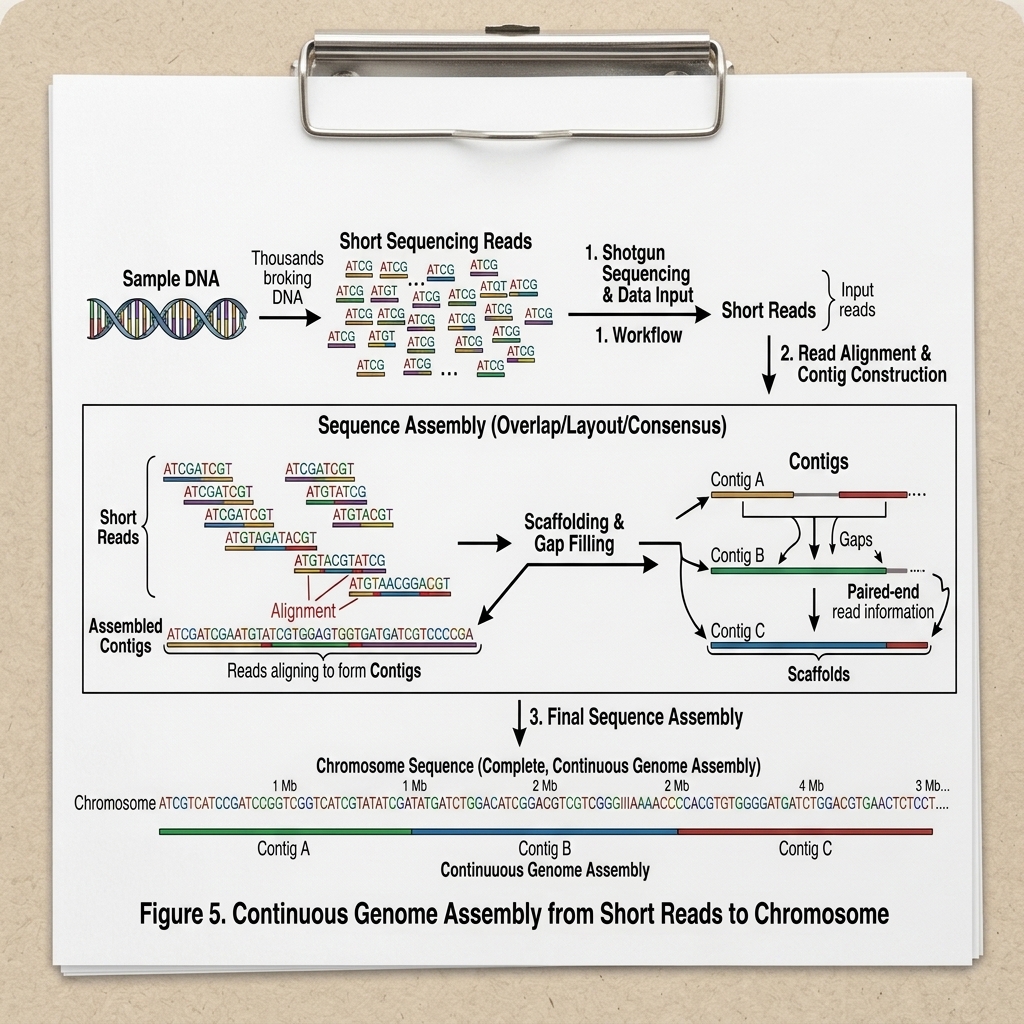
1. Continuous Genome Assembly
One of the first things bioinformaticians do is assemble genomes. Genome assembly assumes chromosomes are continuous DNA molecules. Assembler algorithms work like a jigsaw puzzle.
Imagine if RNA primers were still present. Instead of continuous DNA, you would have an RNA-DNA hybrid mix. The sequence would no longer represent one chemically consistent molecule, and assembly algorithms would encounter discontinuities that do not exist in normal genomes.
2. Reference Genomes
Every reference genome (Human, Mouse, E. coli) is stored as one continuous DNA sequence. There are no RNA primers and no Okazaki fragment boundaries because DNA Polymerase I removed every primer and DNA ligase sealed every nick. Only after these processes does the chromosome become the stable molecule that sequencing captures.
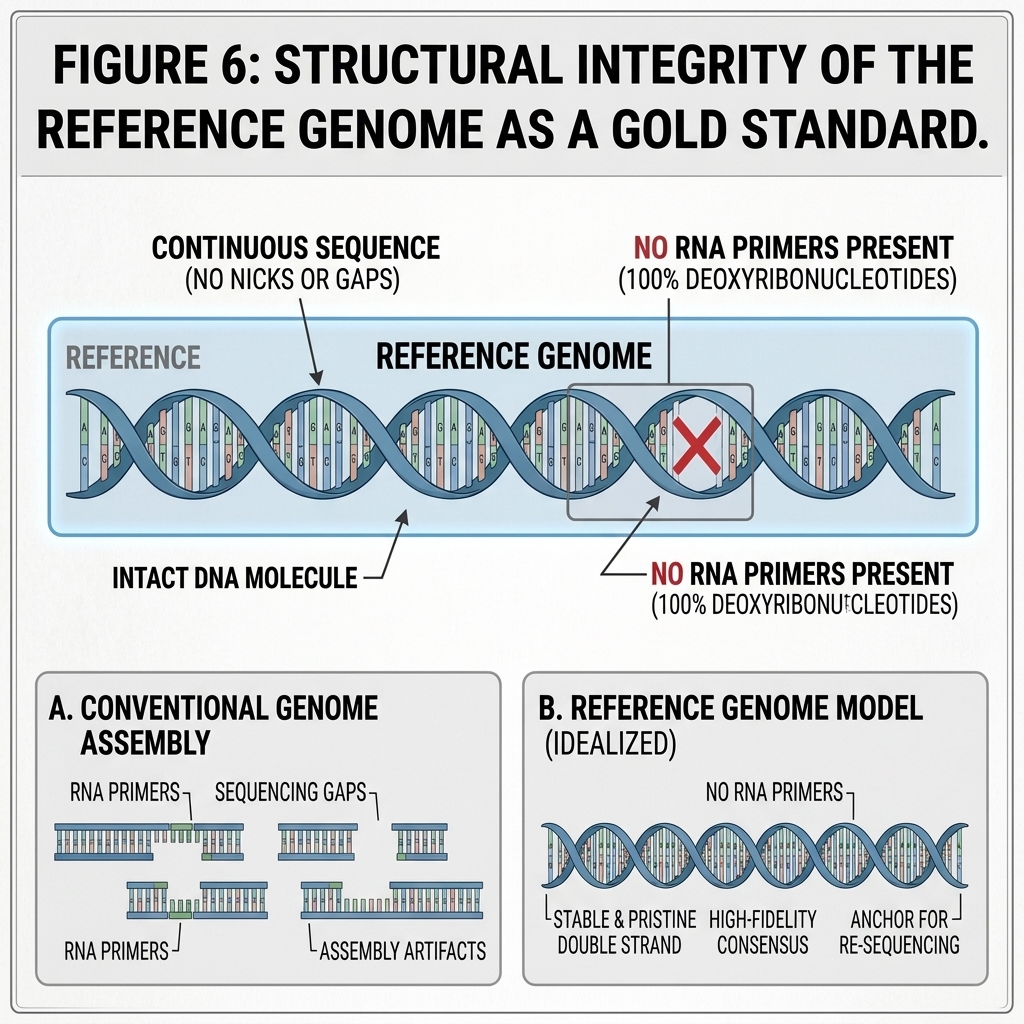
3. Sequencing Accuracy
Suppose ligase never sealed the DNA. The chromosome would contain thousands of tiny breaks. During DNA extraction or library preparation, these weak points would break easily. This would produce fragmented reads, uneven coverage, and poor sequencing quality. Modern sequencing depends on intact chromosomes.
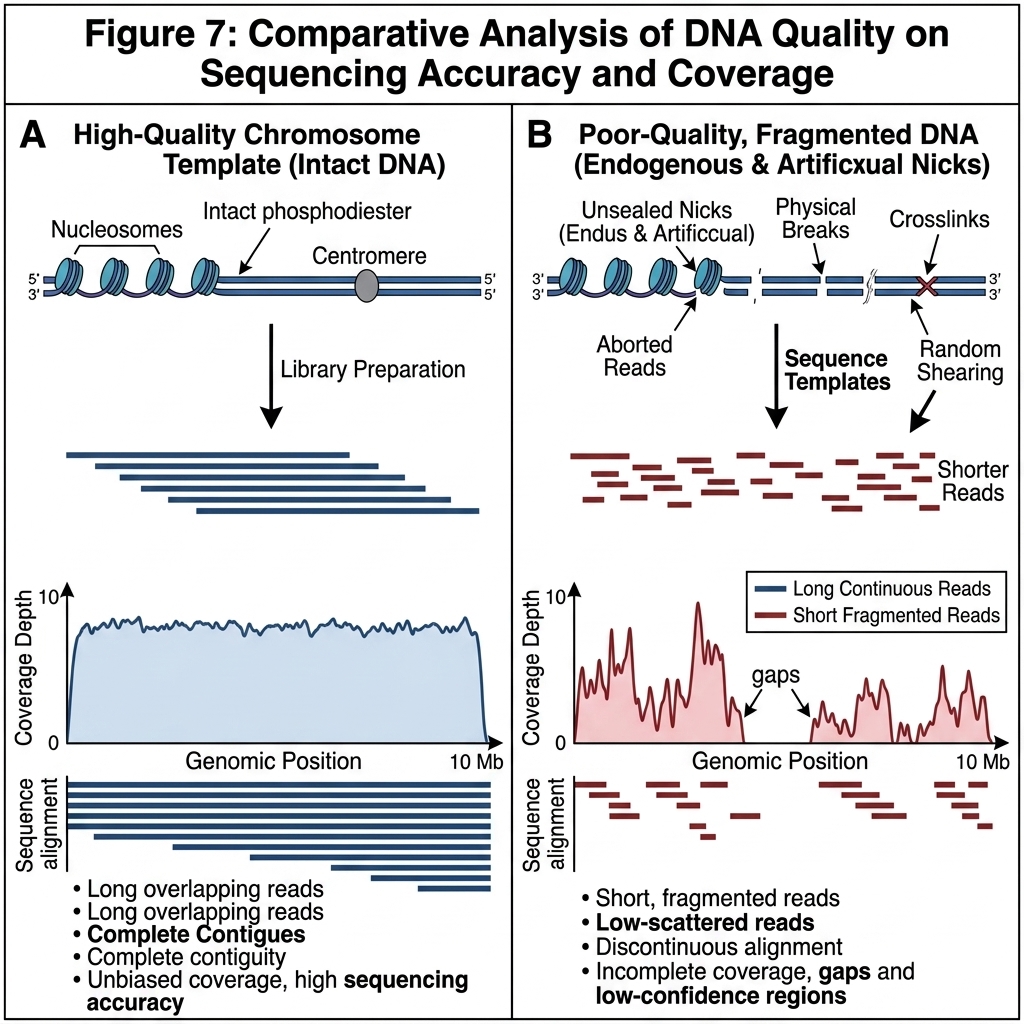
4. Replication Timing Studies (OK-Seq)
Not every sequencing experiment studies finished DNA. Techniques like OK-seq (Okazaki Fragment Sequencing) deliberately sequence these fragments. From these fragments, computational biologists reconstruct replication fork direction, replication origins, and termination zones.
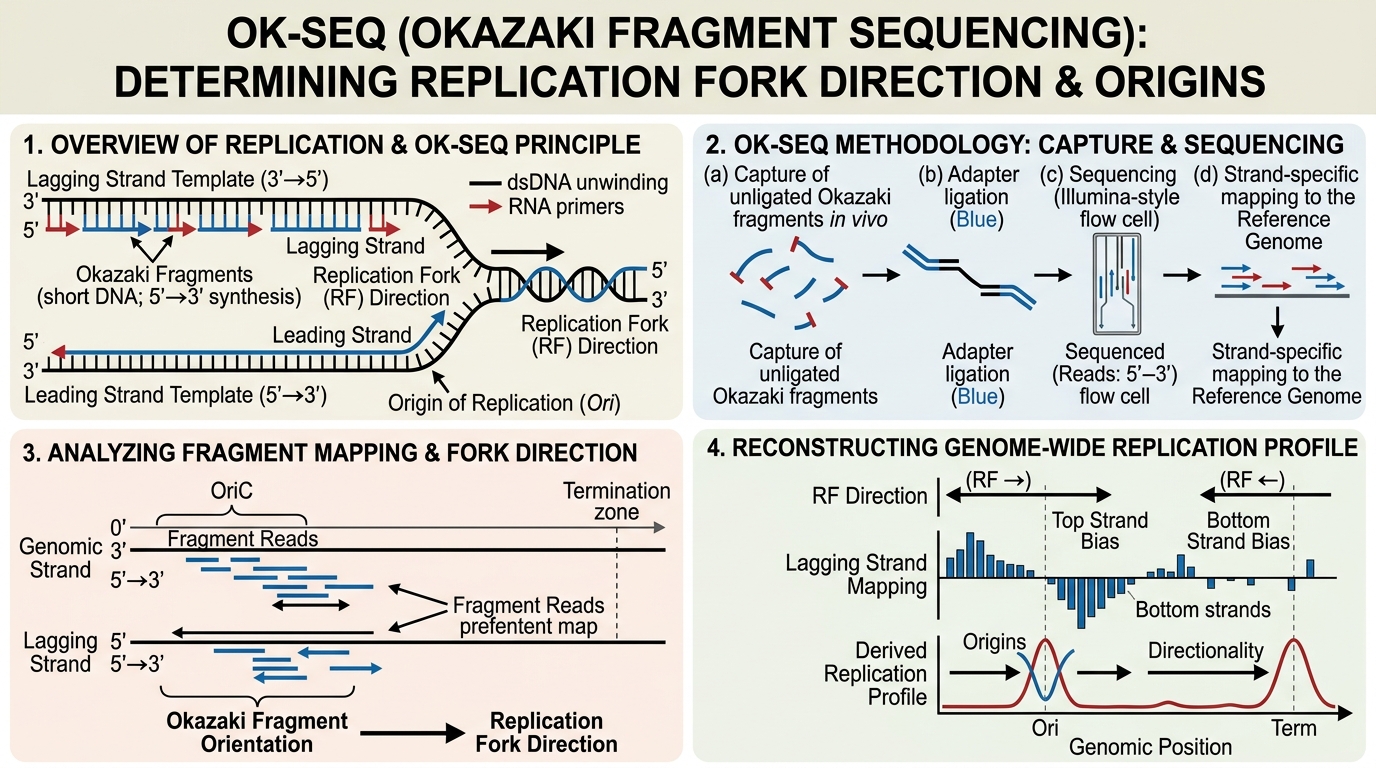
5. Genome Stability & DNA Repair
Cancer genomes contain many structural abnormalities. Some arise because Okazaki fragment processing fails (e.g. if ligase is defective). DNA breaks accumulate leading to large deletions, duplications, or translocations. Bioinformaticians detect these using structural variant callers. Understanding the biology explains where these computational signals originate.
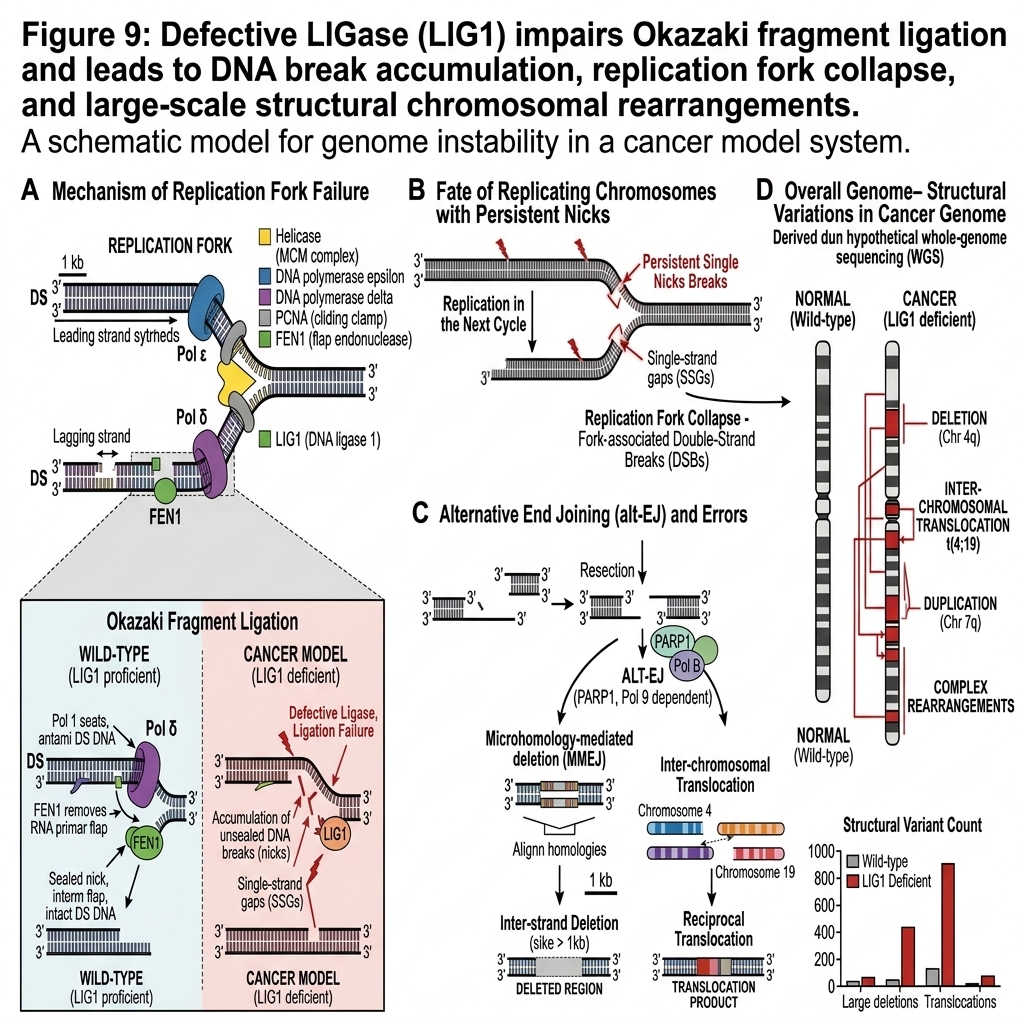
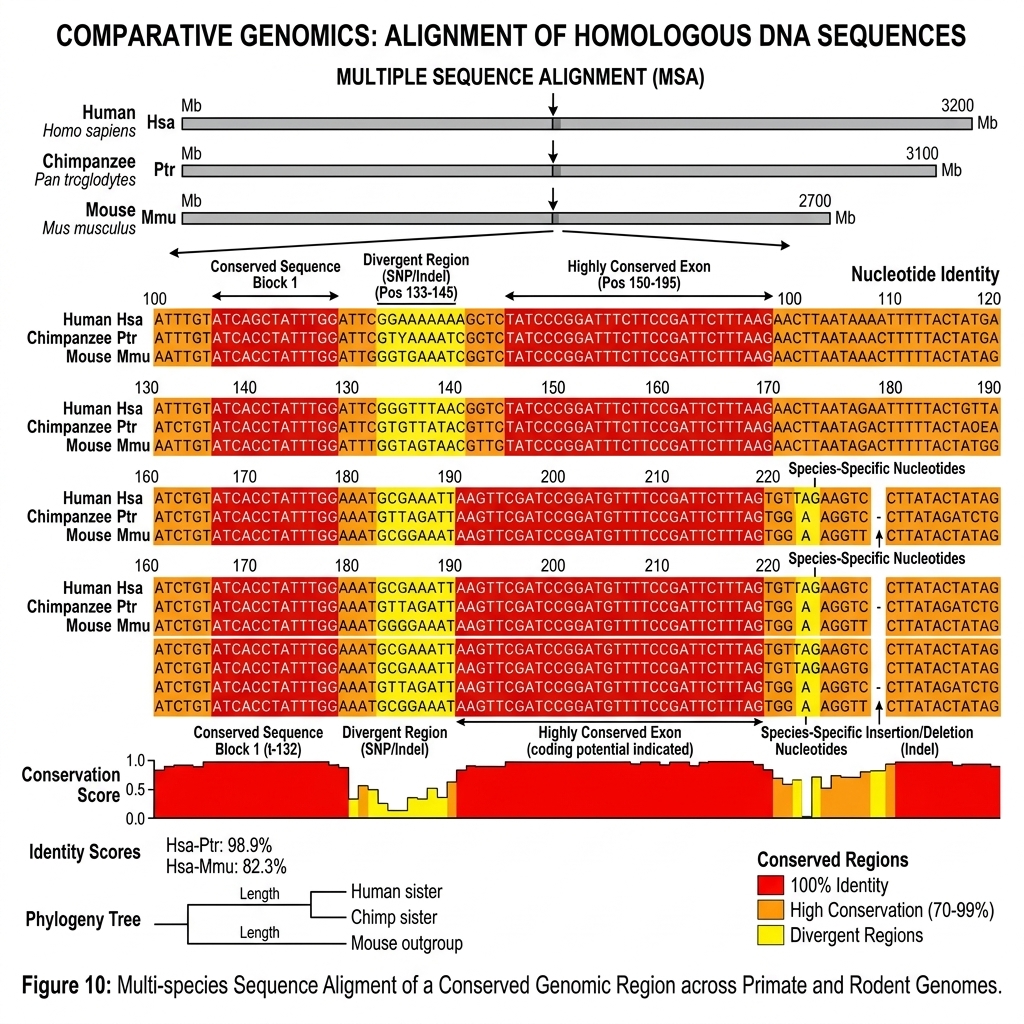
6. Comparative Genomics
One reason genomes remain stable over millions of years is because Okazaki fragment processing is extremely reliable. This stability allows us to computationally align and compare homologous genes between humans, chimpanzees, mice, and fish. If chromosomes accumulated thousands of replication mistakes every generation, multiple sequence alignment would become nearly impossible.
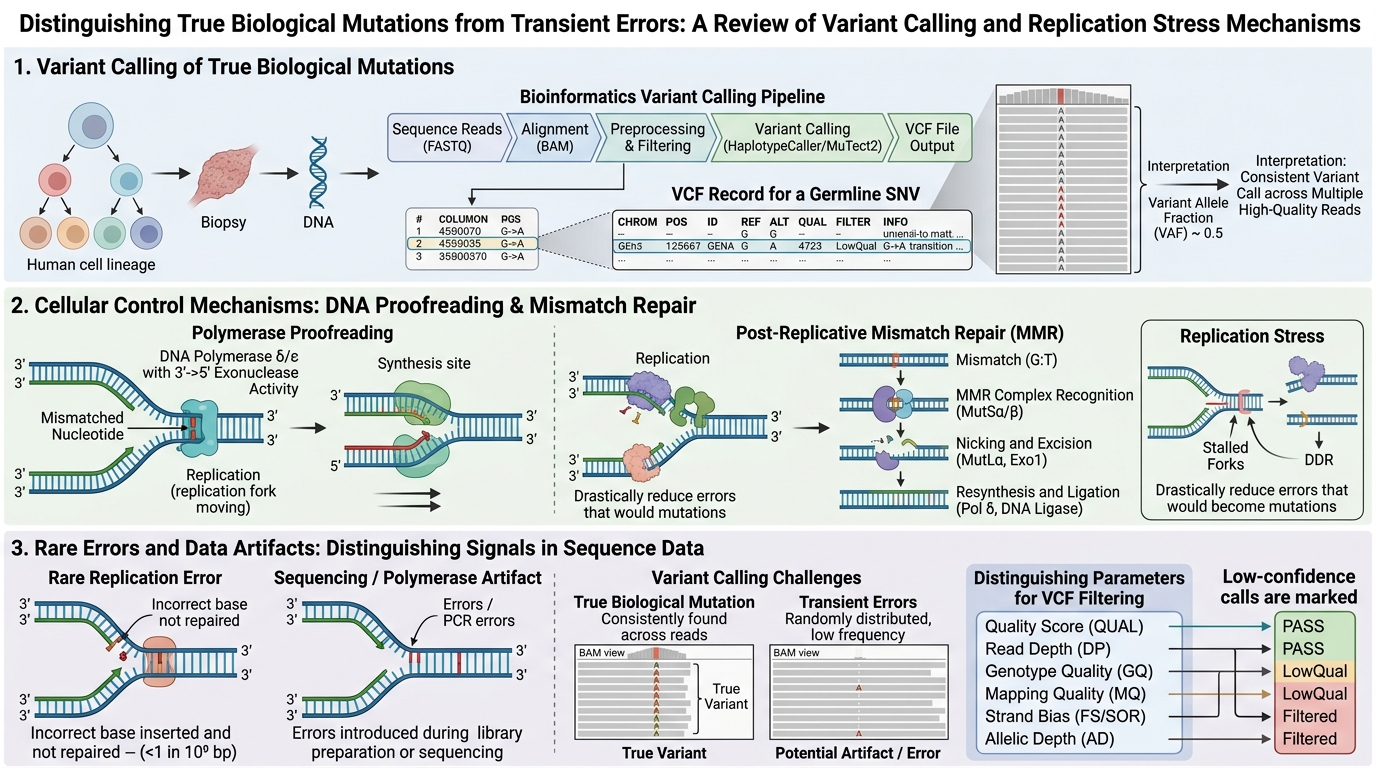
7. Variant Calling & Replication Stress
Is a mutation real? Understanding replication biology helps build statistical models for variant callers. The probability that DNA replication introduced an error is extremely low because of proofreading, mismatch repair, primer replacement, and ligase repair. Therefore, observed variants in a VCF file are much more likely to represent genuine biological changes than routine replication errors.
Summary: Molecular Biology → Bioinformatics
| Molecular Event | Biological Role | Bioinformatics Connection |
|---|---|---|
| RNA primer synthesis | Starts lagging-strand DNA synthesis | Explains replication intermediates studied in replication research |
| DNA polymerase extension | Builds Okazaki fragments | Produces the DNA that becomes the sequenced genome |
| Primer removal | Eliminates temporary RNA from DNA | Ensures the final reference genome contains only DNA |
| DNA replacement | Creates a chemically uniform DNA molecule | Provides consistent substrate for sequencing and genome assembly |
| DNA ligase sealing | Joins fragments into one continuous strand | Maintains chromosome integrity, improving sequencing quality and enabling accurate genome assembly |
| High-fidelity processing | Preserves genome stability | Supports reliable variant calling, comparative genomics, evolutionary analysis, and cancer genomics |
The key takeaway: As a bioinformatician, you rarely analyze Okazaki fragments directly. Instead, you analyze the finished genome that exists because Okazaki fragment processing was completed correctly. Understanding these molecular steps helps explain why the reference genome is continuous, why sequencing data are interpretable, and why deviations from this process are important signals in fields such as cancer genomics, replication dynamics, and DNA repair research.